
Introduction
Shanghai stands alone as China’s truly global city—a cosmopolitan metropolis of 25 million that serves as the nation’s undisputed financial capital, innovation powerhouse, and gateway for international business. With the highest concentration of multinational corporation headquarters in China, world-class universities producing top-tier talent, and infrastructure rivaling London or New York, Shanghai represents the premier destination for companies seeking sophisticated operations in the Chinese market.
For international companies establishing Chinese operations, Shanghai offers unmatched advantages: deep expertise across financial services, fintech, advanced manufacturing, biotech, and professional services; a workforce accustomed to international business practices and cross-cultural collaboration; and an ecosystem where English fluency, global mindset, and premium execution are standard expectations rather than rare exceptions.
An Employer of Record (EOR) partnership enables rapid deployment in Shanghai’s competitive market without the complexity of entity establishment, allowing you to hire compliant employees, manage premium compensation packages, and access top-tier talent within weeks.
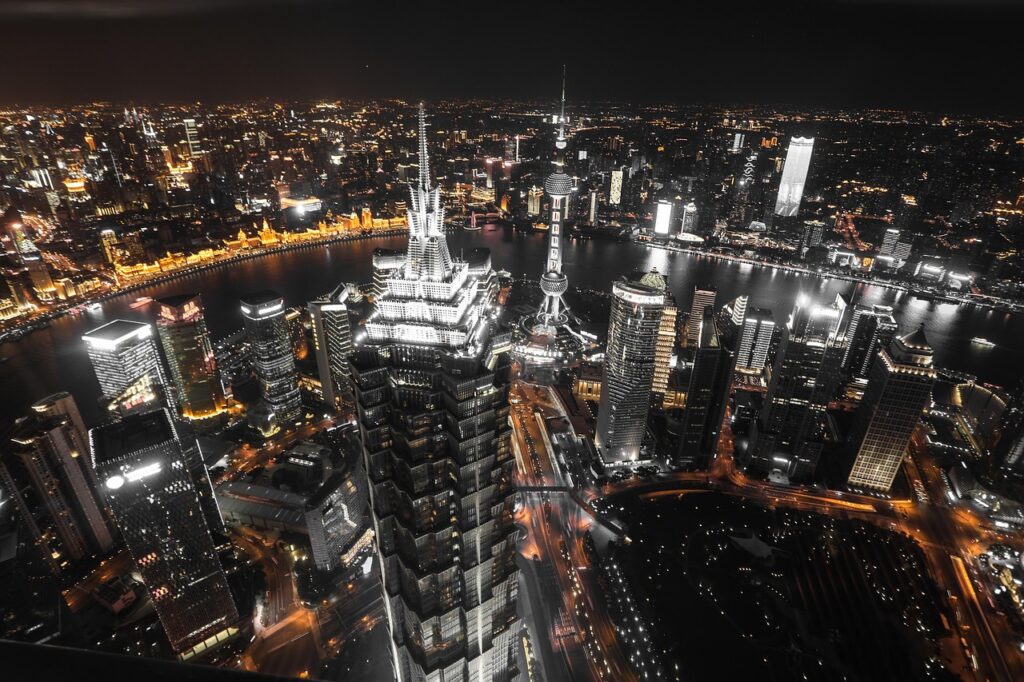
Why Hire in Shanghai? Strategic Advantages for Foreign Companies
China’s Undisputed Global City
Shanghai’s status as China’s most international and cosmopolitan city creates business advantages that extend far beyond mere geography. The city hosts the largest expatriate community in mainland China, operates as the primary entry point for multinational corporations, and maintains a business culture more aligned with global standards than any other Chinese city.
Shanghai’s global city advantages:
- Multinational Corporation Density: Over 700 regional headquarters and 450 foreign-invested R&D centers—creating concentrated expertise in international business operations, compliance, and cross-border management
- International Talent Pool: Largest concentration of overseas returnees (haigui) in China, bringing Silicon Valley, Wall Street, and European business experience to local operations
- Professional Services Ecosystem: Big Four accounting firms, top-tier law firms, management consultancies, executive search agencies—comprehensive support infrastructure for international operations
- Cross-Cultural Fluency: Workforce experienced in navigating cultural differences, managing international teams, and executing to global business standards
- Infrastructure Excellence: World-class metro system, two major international airports (Pudong and Hongqiao), high-speed rail connections, and digital infrastructure supporting global business operations
Financial Services and Fintech Leadership
Shanghai’s Lujiazui financial district serves as China’s Wall Street, hosting the Shanghai Stock Exchange (world’s third-largest by market capitalization), headquarters of China’s major banks, and regional offices of every significant global financial institution. This concentration creates the deepest financial services talent pool in Asia outside Tokyo, with particular strength in areas critical to international business operations.
Financial ecosystem strengths:
- Banking and Capital Markets: Investment banking, corporate finance, securities trading, asset management, private equity—comprehensive financial services expertise
- Fintech Innovation: Alipay and WeChat Pay pioneered mobile payments from Shanghai, creating concentrated expertise in digital finance, blockchain, AI-powered lending, and insurtech
- Regulatory Expertise: Professionals experienced in CSRC regulations, cross-border capital flows, RMB internationalization, and navigating China’s complex financial regulatory environment
- Risk and Compliance: Anti-money laundering, KYC, credit risk modeling, regulatory reporting—sophisticated risk management capabilities
- Quantitative Finance: Strong talent in algorithmic trading, derivatives pricing, portfolio optimization, and financial modeling
Pudong Free Trade Zone and Policy Innovation
The Shanghai Pilot Free Trade Zone, established in Pudong in 2013 and expanded multiple times since, serves as China’s laboratory for economic reform and opening. The zone offers streamlined business registration, preferential tax policies, relaxed foreign ownership restrictions, and simplified customs procedures—creating a more business-friendly environment than elsewhere in China.
Free Trade Zone benefits for businesses:
- Simplified Registration: Faster company establishment, streamlined approvals, and reduced bureaucratic requirements
- Sector Opening: Earlier access to restricted sectors including finance, healthcare, education, and professional services
- Capital Account Liberalization: More flexibility for cross-border capital flows, foreign exchange, and international payments
- Tax Incentives: Preferential income tax rates, VAT exemptions, and customs duty reductions for qualified businesses
- Lingang Special Area: Newest expansion zone offering even greater liberalization, particularly for advanced manufacturing and innovation-driven enterprises
Automotive Innovation and Advanced Manufacturing
Shanghai has emerged as China’s automotive innovation capital, hosting Tesla’s first overseas Gigafactory, NIO’s headquarters, SAIC’s operations (China’s largest automaker), and extensive electric vehicle supply chains. This concentration creates exceptional talent in automotive engineering, battery technology, autonomous driving, and smart manufacturing.
Automotive ecosystem advantages:
- EV and Battery Technology: Deep expertise in lithium-ion batteries, battery management systems, electric powertrains, and charging infrastructure
- Autonomous Driving: Computer vision, sensor fusion, path planning, and AI/ML engineering talent supporting autonomous vehicle development
- Smart Manufacturing: Industry 4.0 implementation, IoT integration, robotics, and advanced manufacturing processes—Tesla Gigafactory serves as showcase
- Supply Chain Excellence: Established networks supporting automotive production from raw materials through final assembly
Shanghai Talent Market Overview for Foreign Employers
Elite University Talent Pipeline in Shanghai
Shanghai hosts several of China’s most prestigious universities, including two members of the elite C9 League (China’s equivalent to the Ivy League). These institutions produce thousands of top-tier graduates annually across engineering, science, business, and technology disciplines.
Premier educational institutions:
- Fudan University (C9 League): Ranked among China’s top 3 universities, strong programs in economics, finance, computer science, medicine, and international relations—produces well-rounded graduates with global perspective
- Shanghai Jiao Tong University (C9 League): Premier engineering institution ranked top 5 in China, exceptional programs in mechanical engineering, electrical engineering, computer science, and automotive engineering
- Tongji University: Leading institution for architecture, civil engineering, urban planning, and automotive engineering—particularly strong industry connections with German companies
- Shanghai University of Finance and Economics: Top specialized university for finance, accounting, and economics—primary talent pipeline for financial services sector
- East China Normal University: Strength in education, psychology, data science, and software engineering
Competition for top graduates remains fierce, with multinational corporations, domestic tech giants, financial institutions, and consulting firms all recruiting aggressively. Companies offering strong employer brands, clear career paths, and competitive compensation attract the best talent.
Shanghai Returnee (Haigui) Talent Advantage
Shanghai attracts the highest concentration of haigui (sea turtles)—Chinese professionals who studied or worked abroad and returned to China. These returnees bring invaluable combinations of international experience, global networks, cross-cultural skills, and deep China market understanding that pure local or expatriate talent cannot match.
Returnee talent characteristics:
- Educational Pedigree: Degrees from Harvard, MIT, Stanford, Oxford, Cambridge and other top global universities
- Professional Experience: Work history at Google, Facebook, Goldman Sachs, McKinsey, and other premium global employers
- Cultural Bridge: Ability to navigate Chinese and Western business cultures, translate between markets, and manage cross-cultural teams effectively
- English Fluency: True bilingual capability enabling seamless communication with global headquarters and local teams
- Global Networks: Maintained connections to international markets, universities, and business communities
Returnees typically command 30-50% salary premiums over locally-educated peers but deliver disproportionate value for companies requiring both China market access and international business capabilities.
Key Industry Talent Clusters in Shanghai
Shanghai’s diversified economy creates deep talent pools across multiple high-value sectors, with particular concentration in areas supporting the city’s role as China’s financial, innovation, and manufacturing hub.
| Industry Sector | Available Talent & Expertise |
| Financial Services | Investment banking, asset management, private equity, securities trading, risk management, regulatory compliance, financial modeling, derivatives |
| Fintech & Payments | Mobile payments, digital banking, blockchain, AI/ML for finance, fraud detection, credit scoring, insurtech, regtech |
| Software & Tech | Full-stack development, cloud architecture, AI/ML engineering, data science, DevOps, cybersecurity, enterprise software, SaaS |
| Automotive & Mobility | EV engineering, battery technology, autonomous driving, ADAS, connected cars, automotive software, smart manufacturing |
| Biotech & Pharma | Drug discovery, clinical research, regulatory affairs, biomanufacturing, medical devices, precision medicine, biostatistics |
| Professional Services | Management consulting, accounting, legal, HR consulting, executive search, market research, business strategy |
| E-commerce & Retail | Platform operations, digital marketing, supply chain, customer analytics, live-streaming commerce, omnichannel retail |
Shanghai’s talent depth means companies can build complete teams locally rather than importing expensive expatriates or compromising on quality.
Shanghai Salary Benchmarks and Compensation Levels(2026)
Shanghai’s compensation levels represent China’s highest, reflecting intense competition for top talent, premium cost of living, and sophisticated market expectations. The 2026 estimated minimum wage of CNY 2,790 per month serves as a regulatory floor, but professional salaries substantially exceed national averages. Companies should budget 25-40% above Beijing levels and 40-60% above second-tier cities for equivalent talent.
| Position | Monthly Salary (CNY) | Annual Total (CNY) |
| Junior Software Engineer | 12,000 – 18,000 | 180,000 – 270,000 |
| Mid-Level Software Engineer | 18,000 – 28,000 | 270,000 – 420,000 |
| Senior Engineer | 28,000 – 35,000 | 420,000 – 525,000 |
| Financial Analyst | 15,000 – 25,000 | 225,000 – 375,000 |
| Data Scientist | 20,000 – 32,000 | 300,000 – 480,000 |
| Product Manager | 18,000 – 30,000 | 270,000 – 450,000 |
| Marketing Manager | 15,000 – 25,000 | 225,000 – 375,000 |
| HR Manager | 12,000 – 20,000 | 180,000 – 300,000 |
| Accountant (CPA) | 10,000 – 18,000 | 150,000 – 270,000 |
Shanghai Employment Law and Compliance for Employer of Record Hiring
Shanghai follows national Chinese employment law while implementing certain municipal-level policies affecting compensation and benefits. As a direct-controlled municipality, Shanghai often leads policy innovation that other provinces later adopt. An Employer of Record handles all compliance requirements, ensuring your operations meet both national and local standards.
Shanghai Social Insurance and Housing Fund Requirements
All Shanghai employers must contribute to China’s five mandatory social insurance programs plus the Housing Provident Fund. Shanghai’s contribution rates and payment bases represent some of China’s highest, reflecting the city’s premium cost structure.
| Insurance Type | Employer % | Employee % | Total % |
| Pension | 16% | 8% | 24% |
| Medical Insurance | 10% | 2% | 12% |
| Unemployment | 0.5% | 0.5% | 1% |
| Work Injury | 0.16%-1.52% | 0% | 0.16%-1.52% |
| Maternity | 1% | 0% | 1% |
| Housing Fund | 7% | 7% | 14% |
| Total (Approximate) | 34.66%-36.02% | 17.5% | 52.16%-53.52% |
For budgeting, expect total employer costs (including social insurance and housing fund) to add approximately 35-36% on top of gross salary. Shanghai’s higher contribution bases (capped at 3x average city wage) mean absolute costs significantly exceed other cities even at identical percentages.
Statutory Leave Entitlements in Shanghai
Statutory leave in Shanghai follows national Chinese labor law:
- Annual Leave: 5 days (1-10 years service), 10 days (10-20 years), 15 days (20+ years)
- Public Holidays: 11 days annually
- Maternity Leave: 158 days in Shanghai (98 days national + 60 days municipal extension)
- Paternity Leave: 10 days in Shanghai
- Sick Leave: 3-24 months depending on tenure, paid at 60-100% of salary
How an Employer of Record(EOR) Works in Shanghai
Employer of Record services enable rapid deployment in Shanghai’s competitive market without establishing a Chinese legal entity. The EOR becomes the legal employer while you retain complete operational control—managing day-to-day work, performance, and business strategy.
Employer of Record Pricing and Setup Timeline in Shanghai
Shanghai EOR engagement typically spans 10-15 days from contract execution to employee start date. Pricing reflects the premium market, with most providers charging USD 400-800 per employee per month or 10-15% of gross salary. Given Shanghai’s high salaries, percentage-based models often prove more expensive than PEPM arrangements for senior roles.
Setup fees range from USD 500-1,500 per employee but are frequently waived for multi-employee commitments or annual contracts. Always request itemized cost breakdowns including all social insurance, housing fund, and tax obligations to understand total employment costs.
Frequently Asked Questions About Employer of Record in Shanghai
- What is an Employer of Record (EOR) in Shanghai?
An Employer of Record (EOR) in Shanghai is a third-party organization that legally employs staff on behalf of foreign companies. The EOR manages employment contracts, payroll, individual income tax, social insurance, and labor law compliance, while the foreign company controls daily work and performance.
- Is using an Employer of Record legal in Shanghai?
Yes. Using an Employer of Record in Shanghai is legal when properly structured. EOR providers act as the legal employer under PRC labor law and Shanghai municipal regulations, ensuring compliant contracts, payroll processing, tax withholding, and mandatory social insurance and housing fund contributions.
- How much does an Employer of Record in Shanghai cost?
An Employer of Record in Shanghai typically costs USD 300–600 per employee per month or 8%–15% of gross salary. These fees are separate from employee compensation, employer social insurance contributions, housing fund payments, and statutory benefits required under Shanghai regulations.
- What is the difference between an EOR and a WFOE in Shanghai?
An EOR allows companies to hire employees in Shanghai without establishing a local legal entity, offering faster setup and lower compliance risk. A Wholly Foreign-Owned Enterprise (WFOE) provides full operational control but requires higher setup costs, longer timelines, and ongoing regulatory obligations.
- What employer compliance risks are highest in Shanghai?
Key compliance risks in Shanghai include improper overtime arrangements, non-compliant employment contracts, incorrect termination procedures, and underpayment of social insurance or housing fund contributions. Shanghai labor arbitration is employee-protective, making EOR-managed compliance critical for foreign employers.
- What roles are commonly hired through an EOR in Shanghai?
Companies commonly hire senior managers, finance professionals, R&D engineers, sales leaders, compliance staff, and regional headquarters roles through an EOR in Shanghai, particularly in financial services, life sciences, advanced manufacturing, and multinational Asia-Pacific management functions.
Conclusion
Shanghai represents China’s premier market for sophisticated international operations—the city where global business standards meet Chinese market dynamics, where world-class talent executes at international levels, and where infrastructure, expertise, and ecosystem combine to enable premium business outcomes. For companies establishing regional headquarters, financial services operations, R&D centers, or sophisticated technology development, Shanghai’s advantages compound significantly over time.
An Employer of Record partnership enables immediate deployment without entity establishment complexity. Within two weeks, you can have compliant employees onboarded and productive, supported by comprehensive payroll, benefits, and regulatory compliance.
Your Shanghai expansion begins with understanding that premium positioning requires premium execution—from selecting the right EOR partner with deep Shanghai expertise to crafting compelling employer value propositions that resonate with sophisticated talent to building operations that leverage the city’s unique advantages.
Partner with EOR China today and maximize your business potential in Shanghai’s dynamic market.
About EOR China
EOR China is a leading Employer of Record service provider specializing in China market expansion. With offices in major cities including Beijing, Shanghai, and Shenzhen, we help international companies hire, manage, and pay their Chinese workforce compliantly and efficiently.
Shanghai is waiting. Speak with a Shanghai Employer of Record specialist to receive a compliant hiring cost breakdown, payroll simulation, and onboarding timeline within 24 hours.